Showing posts with label recipe. Show all posts

Monday, February 8, 2016

Mixed-Up Monday: Puce

Puce is a brownish purple color which gained popularity in 18th century France.  It was said to be the favorite color of Marie Antoinette.  Puce is the french word for "flea" and the name "puce" may refer to the color that was left on linens after a flea was smashed, according to Wikipedia.  :)


What you'll need:
gloves
wool: fiber or yarn
acid dye stocks: brown, magenta, black  (how to mix dye stock)
acid: citric or vinegar
dye pot: stainless steel or crock pot
measuring spoons

I'll be using 1 oz bundles of mixed breed wool combed top for each dye pot.

Gather the wool and soak in some room temp tap water until saturated.

Fill the dye pot up with a few inches of water and add 1/2 tsp of citric acid or 1 TB vinegar.

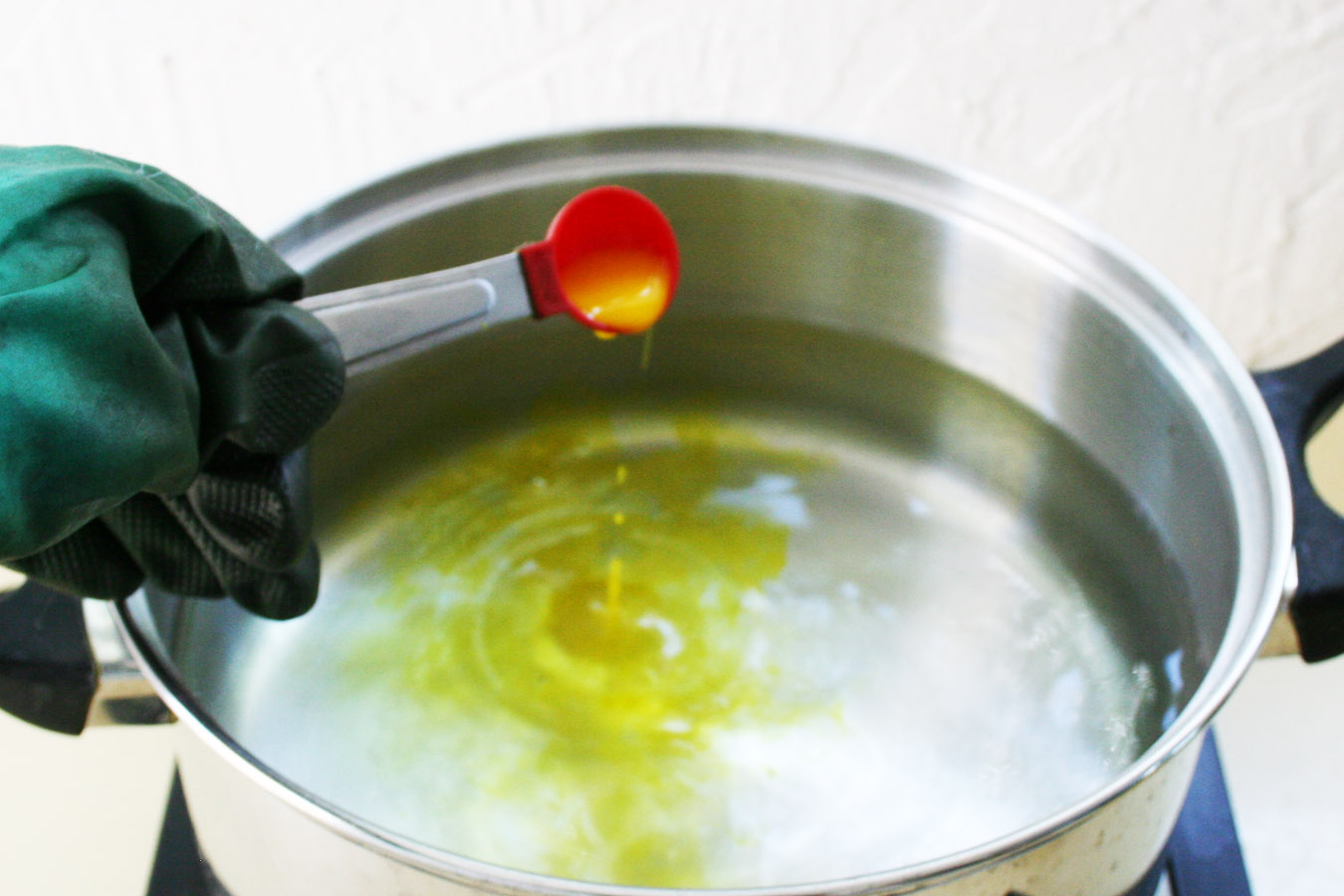
Add 1 TB brown dye stock.

Next, add 1/2 tsp of Magenta dye stock.

Add the damp wool to the pot making sure it is fully submerged.
Cover pot and turn heat to low.  Simmer for about 20 minutes.  Water will be clear when done.
Let cool.
Prepare rinse baths and hang dry.


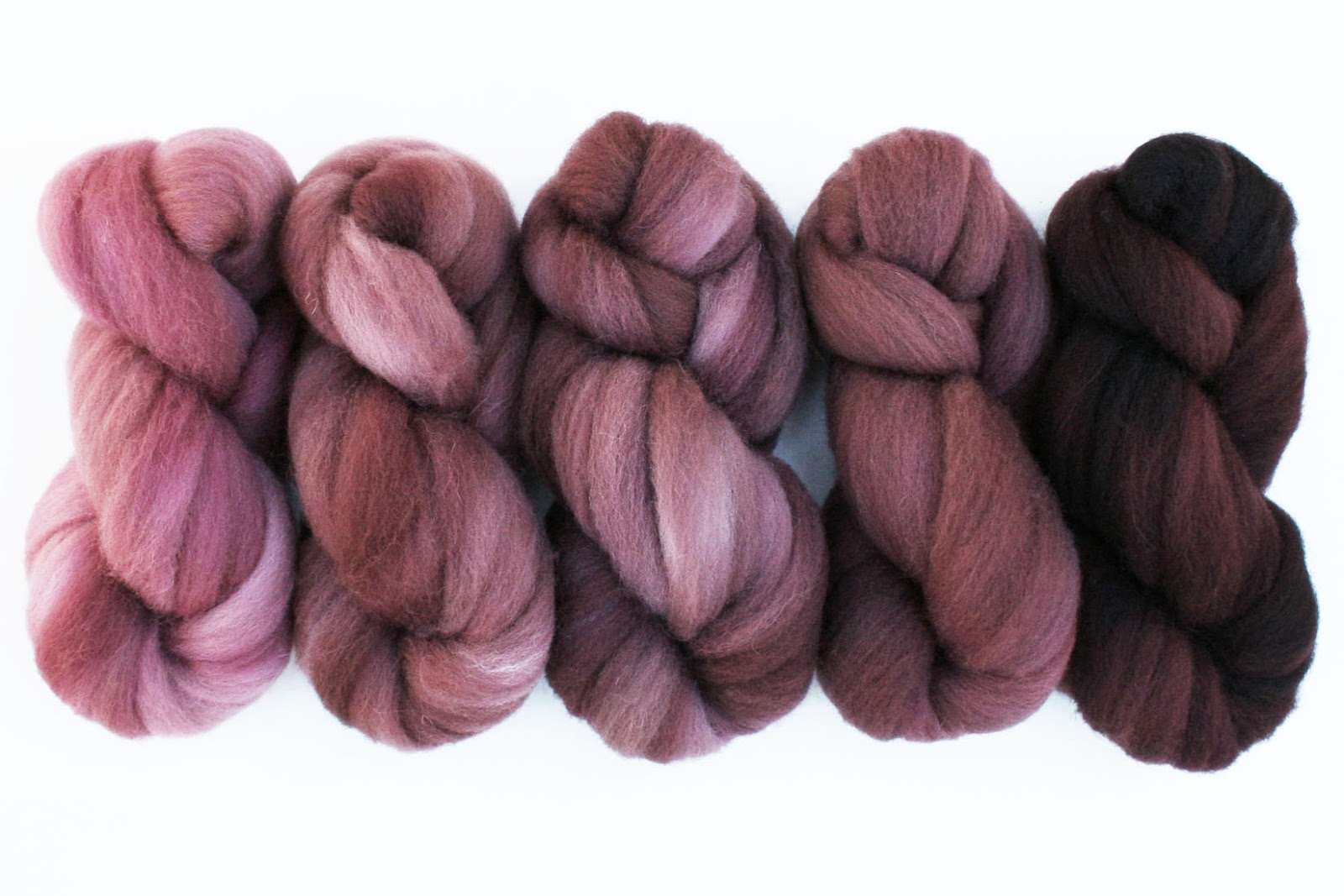
We've got a pretty shade of puce! 


Variations:

I added only 1/2 of the dye recipe here.

This dye pot is the main recipe with 1/4 tsp of Black dye stock added.

Here I added and 1 extra TB of Brown dye stock to the main recipe.

I doubled the recipe in this batch.  


Have fun and keep on dyeing!
xo


Next on Mixed-Up Monday, 2/22:  Camel

Monday, August 17, 2015

Mixed Up Monday: Periwinkle

The color periwinkle gets its name from the color of blossoms produced by the plant called Periwinkle, or myrtle, Vinca minor.  It is a mix of lavender and pale blue.


What you'll need:
gloves
wool: fiber or yarn
acid: citric or vinegar
acid dyes: turquoise and magenta.  Brown, black, and yellow are optional.  (link for mixing dye                            stocks can be found here)
dye pot: stainless steel or crock pot
measuring spoons

I'll be using 1 oz bundles of mixed breed wool combed top for each dye pot.  

Gather your wool and soak in some room temp tap water until saturated.

Add 1/2 tsp citric acid, or 2 tsp vinegar, to a dye pot filled with a few inches of water.  

Add 1 tsp, 5 ml, of Turquoise dye stock to the pot.

Next, add 1/2 tsp of Magenta dye stock.  Give it a stir.

Add the damp wool making sure it is completely submerged.
Cover and turn heat to low.
Simmer for 20 minutes.  Water should be clear when done.
Let cool.

Prepare water baths, one with a couple drops of textile detergent or Blue Dawn, and one bath of plain tap water.  Soak wool in each one for a few minutes. 
Hang dry.


A pretty shade of periwinkle. :)
1 tsp Turquoise dye stock
1/2 tsp Magenta dye stock


Variations:

Adding 1/4 tsp of Yellow dye stock will tone it down while keeping a pastel shade.


Here I added 1/4 tsp of Brown dye stock to darken and warm it up a bit.


Adding 1/4 tsp of Black dye stock will darken and bring out more cool undertones.


Have fun and keep on dyeing!

xo


Mixed Up Mondays will be back soon!  

Monday, August 3, 2015

Mixed-Up Monday: Khaki

Khaki.  Is it a style of clothing or a color?  It's both! It has been used as a color name since 1848 when it was first introduced as a military uniform, and was called both drab and khaki.  A khaki uniform is often referred to as "khakis".


What you'll need:
gloves
wool: fiber or yarn
acid: citric or vinegar
acid dyes: yellow, brown, black  (optional: magenta and turquoise).  Dye stock mixing tutorial here.
dye pot: stainless steel or crockpot
measuring spoons

I'm using 1 oz bundles of mixed breed wool combed top for each color.

Gather the wool and soak in some room temp tap water until saturated.

Add a few inches of water to the dye pot along with 1/2 tsp citric acid (or 2 tsp of vinegar) for 1 oz of fiber.

Measure 1/2 tsp of Yellow dye stock  and add to pot.

Next, add 1/4 tsp of Brown dye stock.

Then add 1/8 tsp of Black dye stock, it's just about 10 drops.

Add the damp wool making sure it is fully submerged.  Cover pot and turn heat to low.
Simmer for about 20 minutes or until dye has exhausted.  Water will be clear.
Let cool.   
For rinsing, I like to prepare 2 baths.  One with a few drop of textile detergent (or Blue Dawn), the other just plain tap water.  Let wool soak in each one for a few minutes.  Hang dry or flat.


You've got khaki!  Give yourself a salute. :)


Variations:

Add 1/8 tsp of Magenta to main recipe to warm it up.

Here I added an extra 1/8 tsp of black to make it lean toward green.

Adding 1/8 tsp of turquoise dye stock to the main recipe makes it more of an army green.


HOOAH!
xo


Next on Mixed-Up Monday, 8/17: Periwinkle

Monday, June 15, 2015

Mixed-Up Monday: terra-cotta

Terra-cotta means "baked-earth" and is a type of earthenware.  It also refers to a brownish orange color.  The color is warm and natural and especially lovely paired with vibrant blues and turquoise.


What you'll need:
gloves
wool: fiber or yarn
acid: citric or vinegar
acid dyes: yellow, red, brown for basic recipe.  Magenta, blue, black for variations.  (mixing dye stock tutorial here)
dye pot: stainless steel or crock pot
measuring spoons

I'll be working with a 1 oz bundle of mixed breed wool combed top for each dyepot.


Gather your wool and soak in some plain tap water until saturated.

Add a few inches of water to the dye pot (enough to cover the amount of fiber you're using).  
Add acid. I'm adding 1/2 tsp citric (or 2 tsp vinegar) for 1 oz of fiber.

Add 2 tsp (10 ml) of Yellow dye stock.

Then add 1 tsp Red dye stock (5 ml).

The final color is 1 tsp (5 ml) of Brown dye stock.  Stir it all up!

Add the damp wool to the pot making sure it is completely submerged.
Turn heat to low, cover.
Simmer for about 20 minutes.  Water will be clear when done.

Let cool.  

Prepare 2 rinse baths, one with a few drops of textile detergent or Blue Dawn,  the other with plain water.  Soak in each one for a few minutes.

Dry flat or hang dry.


The result is an earthy warm terra-cotta.  :)


Variations:

Adding 1/4 tsp Magenta for a more vibrant color and a bit more orange.  (You could also achieve this by adding more red.)

Here I added 1/2 tsp of Blue dye sock to get a richer and warmer color.

Adding 1/2 tsp of Black dye stock will darken it toward brown.

You can also play around with depth of shade and add less dye.  Not show here, but just a 1/4 of the recipe would yield a beautiful soft apricot color.  If you try it, let me know how it turns out!


Have fun and keep on dyeing!
xo


Mixed-Up Monday will be back in August.  :D